English| EUR
Suggested for you
More currencies
Choose a language
Jasper's dark-sky designation delivers some of North America's clearest celestial views, but conditions shift nightly. This guide explains how to interpret cloud cover forecasts, moon phase calendars, and atmospheric transparency data so you arrive prepared for telescope sessions at the planetarium.
Quick answer
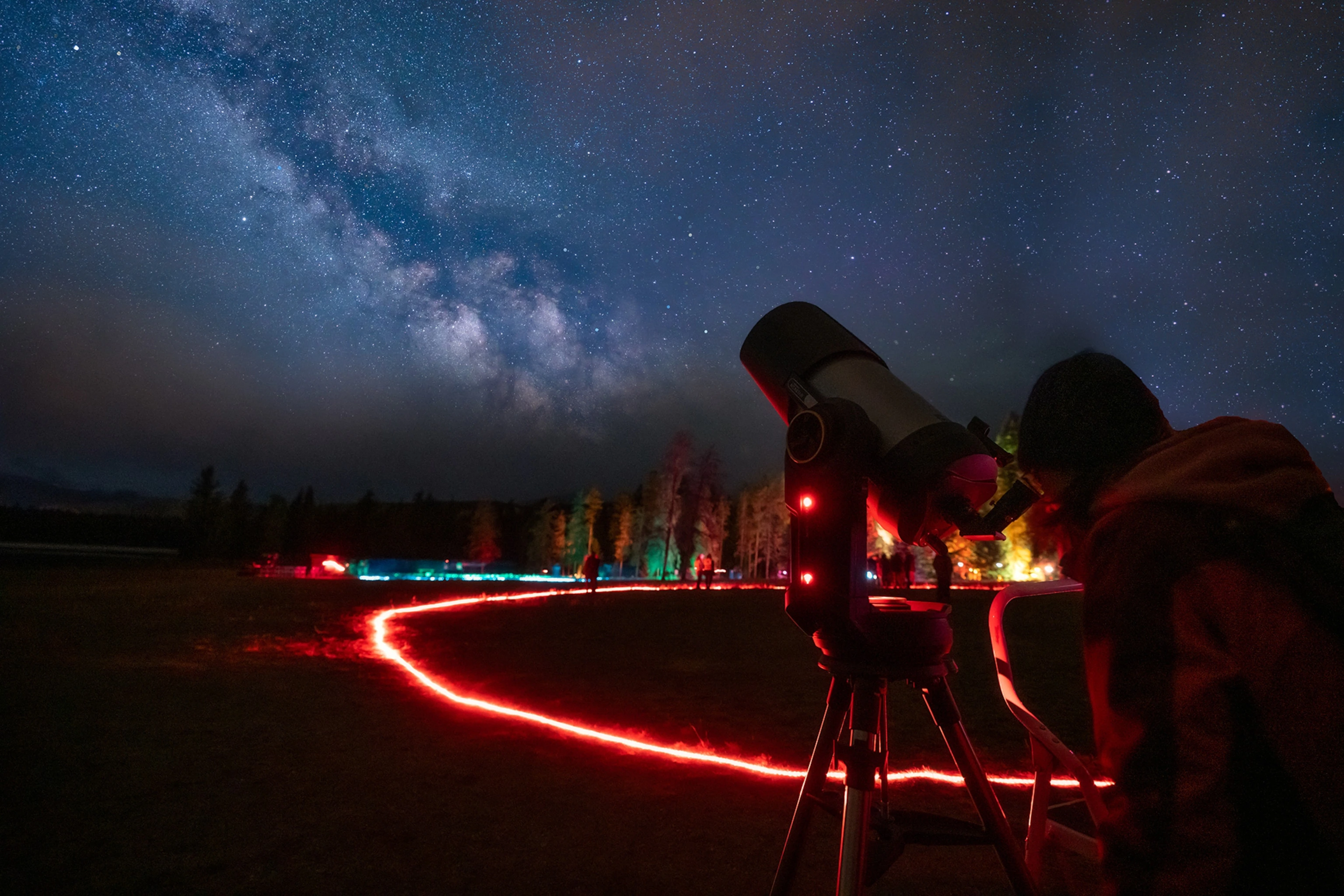
Check Jasper's clear sky chart 24 hours before your visit to assess cloud cover, atmospheric transparency, and moon phase. The best stargazing occurs during new moon phases with cloud cover below 30 percent and transparency readings above 70 percent. Evening sessions between 22:30 and 23:00 provide the darkest skies, when light pollution from Jasper townsite drops to minimal levels and the planetarium's telescopes can resolve deep-sky objects.
Jasper National Park holds a Dark Sky Preserve designation covering 11,000 square kilometers, yet atmospheric conditions determine whether you'll see the Andromeda Galaxy or only the brightest stars. Cloud cover remains the most decisive variable: even 40 percent coverage can obscure faint nebulae and galaxies that require unobstructed lines of sight. Transparency—the clarity of air between ground and stratosphere—dictates contrast and detail, with readings below 60 percent producing washed-out views even under cloudless skies. Moon phase governs ambient illumination across the viewing field. A full moon saturates the sky with reflected sunlight, reducing visible star count by 80 percent and rendering most deep-sky objects invisible through standard telescopes. New moon windows, which occur roughly every 29.5 days, offer the darkest conditions for observing faint targets like the Pleiades cluster or the Orion Nebula. The jasper stargazing forecast integrates these metrics into a single readiness score, updated hourly by Environment Canada's meteorological stations positioned near Maligne Lake and Athabasca Falls. Seeing conditions—the steadiness of upper-atmosphere air—affect planetary detail. Turbulent jet streams cause stars to twinkle and planetary discs to blur, a phenomenon quantified on the Pickering scale from 1 to 10. Readings above 6 allow resolution of Jupiter's cloud bands and Saturn's Cassini Division, while scores below 4 reduce planets to indistinct blobs. Local topography compounds these effects: Jasper townsite sits in a valley where temperature inversions trap humidity, creating a haze layer that dissipates only after 22:00 when radiative cooling stabilizes the air column. Practical preparation begins three days out. Monitor the seven-day cloud forecast and identify nights with projected coverage under 20 percent. Cross-reference moon rise and set times to isolate hours of true darkness—the interval between astronomical twilight and lunar interference. On the day of your session, verify real-time transparency and seeing indices through the Canadian Astronomy Data Centre's Jasper node, which publishes conditions at 15-minute intervals. Dress in layers capable of handling temperature drops to 5°C even in summer, and bring a red-filtered flashlight to preserve night vision during equipment adjustments.
“A full moon reduces visible star count by 80 percent, rendering most deep-sky objects invisible through standard telescopes.”
The most effective time for stargazing is during the late-night window of 22:30–23:00, as this ensures the darkest possible sky conditions for telescope viewing. Seasonal visibility varies significantly, with colder months providing clearer air and earlier sunset times.
Clear, cold skies (-15°C to 5°C). Crisp air improves visibility for deep-sky observation.
Mild temperatures (5°C to 20°C). Longer daylight hours limit the available darkness window.
—
Arriving during this specific window is critical for dark-sky conditions and optimal telescope stargazing.
Verdict: The best stargazing conditions occur between October and March, targeting the 22:30–23:00 arrival window.
Night viewing in Jasper requires warm gear and clear sky conditions—check forecasts and layer appropriately before heading out.
The Jasper Planetarium maintains consistent operating hours throughout the week to accommodate visitors interested in stargazing experiences. Please review the schedule below when planning your visit to the facility.
Everything you need to know about jasper stargazing forecast
To interpret the jasper stargazing forecast, monitor local cloud cover maps and transparency reports provided by meteorological services. Clear, moonless nights provide the highest visibility for celestial objects. Always check the jasper stargazing forecast closer to your session time as mountain weather patterns can shift rapidly. Your preparation for a night under the stars should include verifying the latest jasper stargazing forecast to ensure optimal dark sky conditions. Visit the official website to secure your dome theatre experience, which provides an educational foundation before heading out to the telescopes. Arriving during the 22:30–23:00 window helps you settle into the environment for the darkest viewing experience. High humidity or dense cloud cover can obscure constellations, though indoor planetarium presentations proceed regardless of exterior conditions. Monitoring the jasper stargazing forecast helps you anticipate whether telescopic viewing will be possible or if the session will remain focused on dome theatre projections. Reservations are managed through the official planetarium portal to ensure capacity limits are respected. You should check availability in advance to avoid disappointment during peak autumn travel periods. Dress in layers because nighttime temperatures in the Rockies drop significantly even after a warm day. Bringing a red-light flashlight helps preserve your night vision while navigating the grounds. The experience is designed to be educational and accessible, making it suitable for families interested in space science. Children must be supervised at all times to ensure they respect the sensitive optics and the quiet atmosphere of the site.