English| EUR
Suggested for you
More currencies
Choose a language
The annual Dark Sky festival brings astronomers, telescope operators, and thousands of night sky enthusiasts to Jasper National Park each October. This guide covers event dates, program schedules, and what first-time attendees need to know before the festival weekend.
Quick answer
The jasper stargazing festival runs annually over a mid-October weekend, typically Friday through Sunday, within Jasper Dark Sky Preserve. The 2026 edition takes place October 16-18. Programming includes guided telescope sessions at the Planetarium, constellation walks along Pyramid Lake, Indigenous star knowledge workshops, and astrophotography clinics. Most outdoor sessions require advance registration due to capacity limits, though daytime talks at the Planetarium operate on a first-come basis.
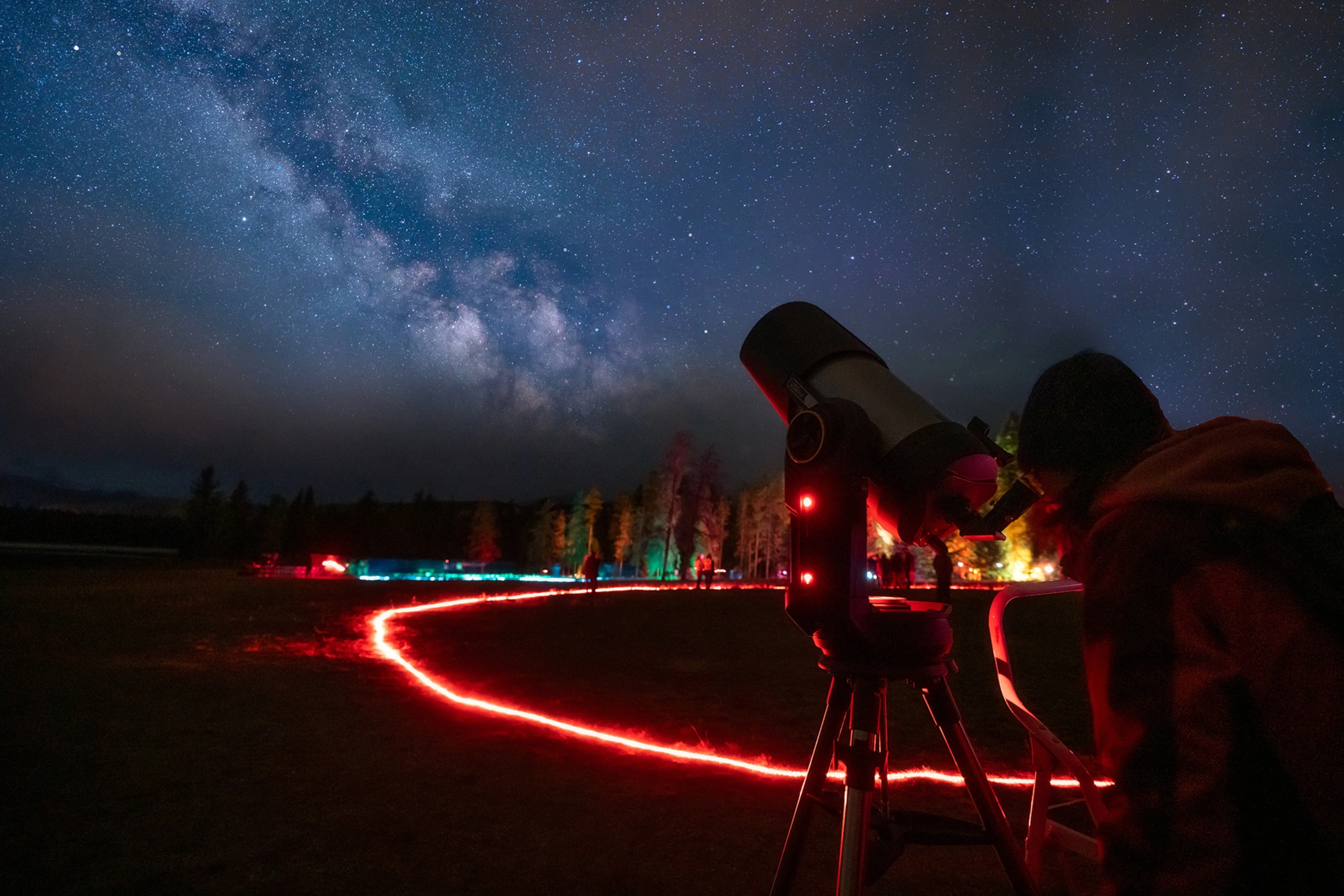
Jasper National Park holds designation as the world's second-largest accessible Dark Sky Preserve, and the annual celebration of that status draws more than 3,000 visitors across a single October weekend. The jasper stargazing festival began in 2011 as a modest gathering of amateur astronomers; by 2026 it spans three days, thirty programs, and partnerships with Indigenous knowledge keepers, Parks Canada interpreters, and university astrophysics departments. Festival programming splits into four streams. Telescope sessions at the Planetarium and at Pyramid Island run from dusk until 2:00 AM, weather permitting, with operators rotating visitors through Dobsonian reflectors trained on Saturn, the Andromeda Galaxy, and the Pleiades cluster. Indigenous astronomy workshops led by Cree and Stoney Nakoda Elders trace the constellations that guided seasonal migration and hunting cycles across the Athabasca Valley. Astrophotography clinics teach long-exposure technique on the shore of Lake Edith, where light pollution measures below 0.15 on the Bortle scale. Daytime talks cover topics from exoplanet detection methods to the mechanics of auroral displays, most held in the Planetarium dome with no pre-registration required. Weather shapes every festival. October in the Rockies brings unpredictable conditions—clear nights can drop to minus ten Celsius, and cloud cover sometimes scrubs outdoor sessions entirely. The festival organizers publish a contingency grid seventy-two hours before opening night, shifting telescope programs indoors or substituting recorded dome shows when cloud forecasts exceed sixty percent. Participants are advised to monitor the Planetarium's event page from mid-week onward. Even under clouds, the workshops, talks, and Indigenous star knowledge sessions proceed on schedule, and the Planetarium Experience—the facility's signature fulldome projection—runs hourly throughout each festival day. Accommodation in Jasper fills months ahead of the festival weekend. Visitors booking late often base themselves in Hinton, eighty kilometers east, and drive in for evening programs. The Town of Jasper enforces strict light ordinances year-round, and during the festival all non-essential streetlights along Connaught Drive and Patricia Street are dimmed after 9:00 PM to preserve sky darkness. Parking at the Planetarium is limited to forty vehicles; a free shuttle runs every twenty minutes from the Jasper Activity Centre between 7:00 PM and midnight on Friday and Saturday nights.
“October in the Rockies brings unpredictable conditions—clear nights can drop to minus ten Celsius, and cloud cover sometimes scrubs outdoor sessions entirely.”
The Jasper Dark Sky Festival typically occurs in October, drawing visitors to the region for specialized astronomical programming. Planning ahead is necessary as park-wide events and planetarium sessions often reach capacity during this period.
This festival features guest speakers, telescope workshops, and guided stargazing sessions across the park. Expect higher visitor volume and limited availability for tours, requiring advance planning for all bookings.
Clear winter nights provide high-contrast viewing conditions for aurora borealis and deep-sky observation. Crowds are smaller than in summer, offering more consistent availability for planetarium programming.
Longer daylight hours shift the primary stargazing activities to late evening, focusing on lunar and planetary viewing. This period coincides with peak tourist season, so early scheduling through the official site is recommended.
This sequence suits visitors attending both indoor planetarium programming and evening outdoor observation sessions during the festival. Plan for a full evening commitment, typically 3–4 hours from arrival to departure.
Arrive during daylight hours to familiarize yourself with the facility layout, locate restrooms, and identify the outdoor viewing areas you'll return to after dark.
Choose a dome show from the festival lineup—most run 45–60 minutes—and arrive 10–15 minutes early to secure seating and allow your eyes to adjust to the dim interior.
Use the break between indoor programming and full darkness to grab a warm drink, review the night's sky map provided by festival staff, and dress in layers for outdoor viewing.
Head to the designated viewing field once it's fully dark; festival guides rotate groups through telescopes trained on featured deep-sky objects, with typical viewing windows of 60–90 minutes.
Spend your final 30–45 minutes exploring the sky at your own pace, asking questions of roaming educators, then depart when ready—the site remains accessible throughout the night.
The Jasper Planetarium operates daily to accommodate visitors interested in stargazing experiences. Tours are scheduled throughout the day and evening.
The Jasper Planetarium is located at 1 Old Lodge Rd, Jasper, AB T0E 1E0, Canada. The most direct approach is by vehicle via the primary access roads leading to the Fairmont Jasper Park Lodge grounds.
Highway 16 to Lodge Road
Local Jasper taxi services
From Jasper townsite via designated trails
Tours are scheduled throughout the day and evening, so check availability for specific show times. Ensure you allow sufficient time for travel from the townsite, as parking availability can fluctuate during peak festival periods.
Reserve your spot and prepare for optimal viewing conditions at the festival.
Everything you need to know about jasper stargazing festival
The event features a mix of guided dome theatre presentations and outdoor telescope sessions at the Jasper Planetarium. You can explore the cosmos with expert guides, learn about local constellations, and view deep-space objects through the most powerful telescope in the Rockies. Participants often enjoy interactive exhibits and astronomy-themed workshops during the annual celebration. Access to booking for these experiences is available via the official website, where you can browse specific show times and tour packages. It is recommended to plan your visit in advance to secure a spot for popular sessions throughout the autumn season. While many activities are family-friendly, please note that children under 4 are not permitted inside the planetarium dome theatre. Most other outdoor experiences are open to all ages, providing a great opportunity for budding astronomers to learn together. In the event of cloud cover or poor weather, the planetarium provides alternative programming to ensure you still have an educational experience. Guests receive a two-year rain check, allowing them to re-book at no additional cost if they wish to see the skies on a clearer night. You do not need to be a hotel guest to visit the facility, as all tours are open to the public. The planetarium desk is located inside the main lobby of the Fairmont Jasper Park Lodge. For those without a vehicle, you may call the Fairmont shuttle or local taxi services to arrange transport. Please verify shuttle availability by calling the hotel directly before your scheduled tour time.