3 hr
Dark Sky Astronomy Experience at Jasper Planetarium
Three-hour guided journey through the cosmos with dome theatre, telescopes, and stargazing at a pristine dark-sky location
Reserve
Hand-picked by our editors — only the best 5 astronomy experiences from 12 reviewed.
Verified partners for every tour, free cancellation where available, and instant confirmation on every booking.
3 hr
Three-hour guided journey through the cosmos with dome theatre, telescopes, and stargazing at a pristine dark-sky location
Reserve
1 hr 30 min
Journey through the cosmos in a dome theatre, then explore the night sky through the Rockies' most powerful telescopes
Reserve
35 min
Journey through the cosmos in a 42-seat climate-controlled dome at the world's largest Dark Sky Preserve
ReservePrices from verified partners. Availability updates in real time at checkout. Free cancellation policies apply where shown.
The landmarks, rooms, and views travelers on this tour remember — all visible on a single visit.
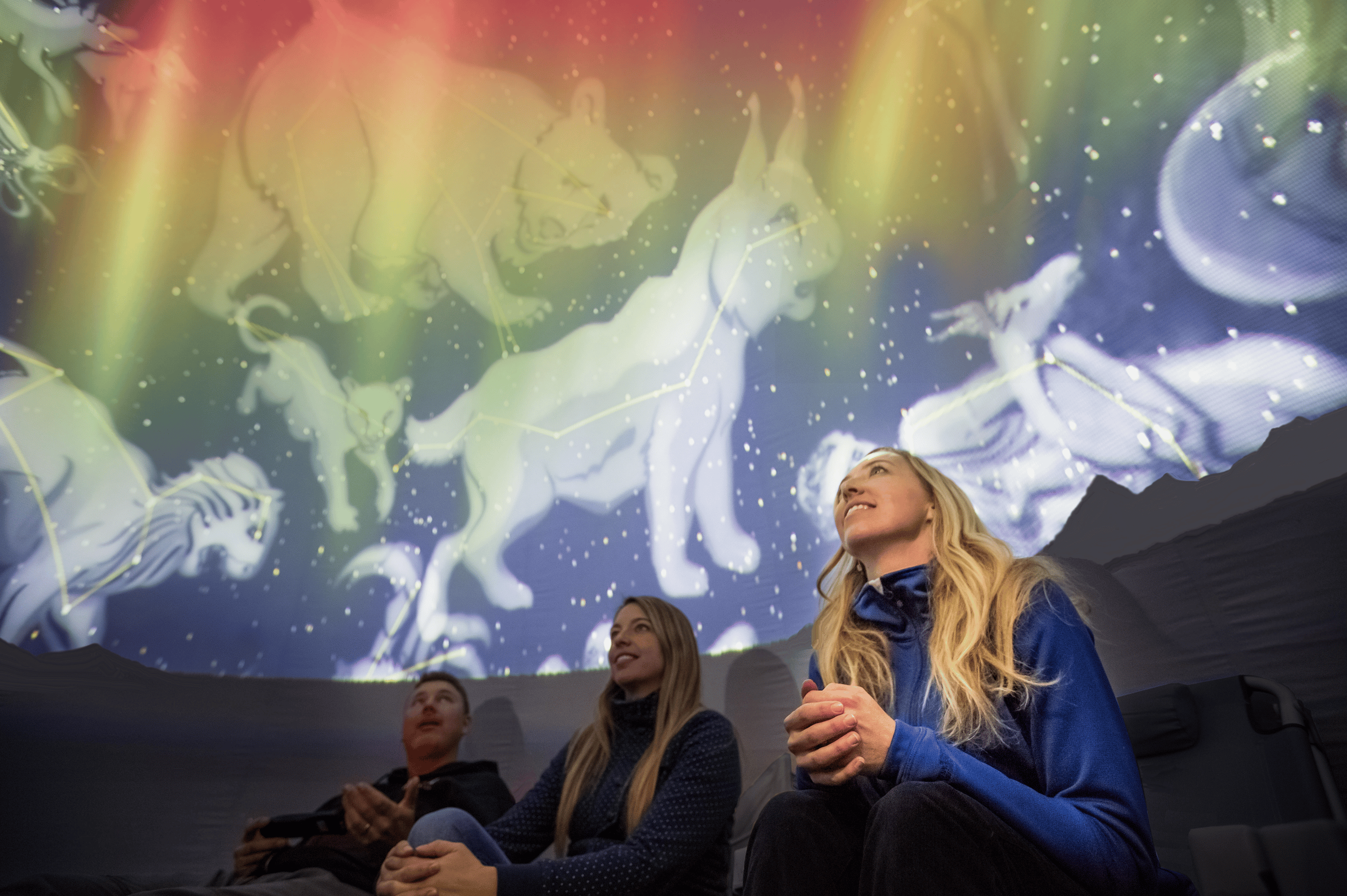
An immersive 38-seat environment featuring live guided shows and indigenous storytelling about the stars.
Telescope Experience
Dark Sky Preserve Views
Meteorite Collection
First Nations Constellations
The Jasper stargazing tour offers an immersive look at the night sky, while the SkyTram focuses on daytime mountain vistas; most visitors who do both find the planetarium sessions more intellectually engaging. Selecting between these Jasper landmarks depends on whether you prefer deep space exploration or expansive alpine scenery.
| Feature | Top pick Jasper Planetarium | Jasper SkyTram |
|---|---|---|
Activity Focus |
Astronomy and telescopes | Aerial mountain sightseeing |
Primary Experience |
Guided night sky observation | Panoramic summit views |
Indoor vs Outdoor |
Primarily indoor dome | Outdoor viewing platforms |
Guided Content |
Live astronomical interpretation | Self-guided exploration |
Physical Exertion |
Minimal | Moderate walking at summit |
| See tickets → |
Verdict: Choose the planetarium for its expert-led celestial insights when searching for jasper stargazing tour tickets, or opt for the SkyTram to enjoy sweeping geological views.
Choose your ticket, select your date, and reserve in under two minutes. Secure checkout handled by our verified partner.
Instant confirmation by email, with a mobile voucher you can save offline. No printing, no queuing at a collection desk.
Arrive at the entrance, show your voucher on your phone, and walk in. Most tickets include priority or skip-the-line access.
Practical details for your visit straight from our verified partners — hours, access, rules, and how to get there.
Dress in layers and wear warm clothing, especially for the telescope portion which takes place outdoors. Winter gear is recommended even in shoulder seasons as nighttime mountain temperatures drop significantly.
No specific bag restrictions are enforced, but visitors should travel light as there is no storage for large luggage at the Jasper Planetarium. Security and staff are located inside the Fairmont Jasper Park Lodge lobby.
Non-commercial photography is permitted in most areas, but flash photography is strictly prohibited inside the planetarium dome during shows. Guides can provide tips on photographing the Milky Way or aurora borealis during the outdoor portion of your Jasper stargazing tour.
The Jasper Planetarium dome theatre is wheelchair accessible. Please inform staff in advance if you require assistance during your Jasper stargazing tour.
Children aged 4 and older are welcome to participate in the planetarium dome theatre. The experience is highly educational, making it a popular choice for families looking for evening activities during a Jasper stargazing tour.
Food and drinks are not provided and are generally prohibited inside the planetarium dome. Guests are encouraged to dine at nearby Fairmont Jasper Park Lodge restaurants before or after their Jasper stargazing tour.
Best time to go, insider tips, nearby landmarks, and the cancellation fine print — flip through to skim what matters to you.
Flexible, no hidden fees.
If skies are too cloudy, guests receive a two-year rain check to rebook at no additional charge. For non-weather cancellations, contact the Jasper Planetarium directly.
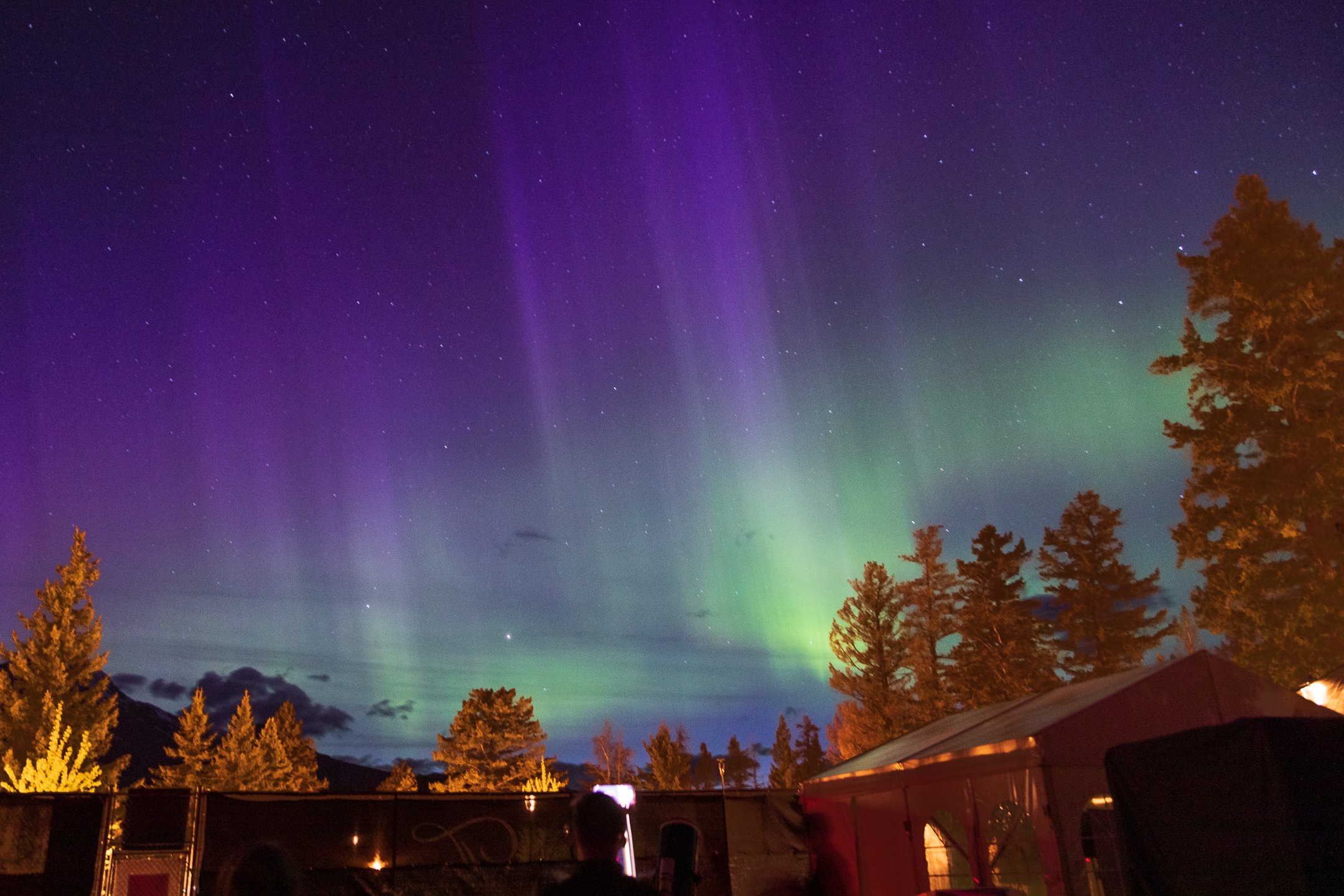
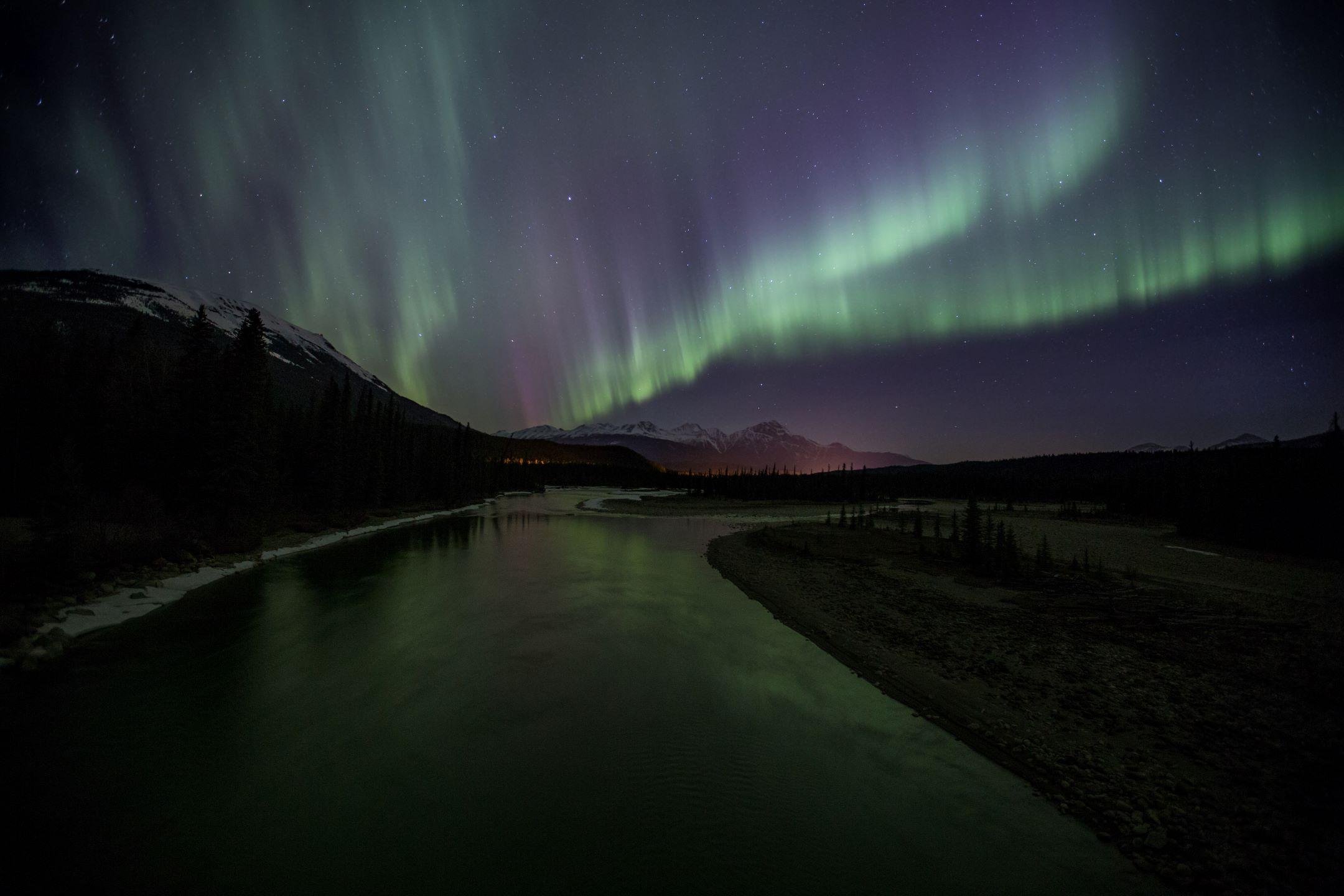
Jasper National Park holds designation as the world's second-largest dark sky preserve, spanning 11,000 square kilometres of protected night sky where light pollution measures below 21.0 magnitude per square arcsecond. The Jasper Planetarium opened in 2019 at the base of Whistlers Mountain, replacing seasonal telescope programs that had operated intermittently since the park's 1907 establishment. Its 40-seat dome theatre projects 8K resolution star maps calibrated to real-time celestial positions, synchronized with a retractable roof that opens to the actual sky when atmospheric conditions permit. The planetarium's location at 1,060 metres elevation places it above the inversion layer that traps moisture in the Athabasca Valley, yielding clear viewing conditions on approximately 240 nights per year. Autumn and winter sessions between September and March offer the longest observation windows, with darkness descending by 18:00 and aurora borealis activity peaking during equinox transitions. The facility operates five distinct astronomy programs: dome theatre presentations explaining constellation mythology and planetary motion, guided telescope sessions using 8-inch and 14-inch Celestron reflectors, Dark Sky photography workshops teaching long-exposure technique, private stargazing tours with dedicated interpreters, and seasonal aurora tracking expeditions when geomagnetic activity exceeds KP index 4. Jasper's night sky reveals objects invisible from lower latitudes or light-polluted regions. The Andromeda Galaxy appears as a faint smudge to the naked eye, resolving into a spiral structure through the planetarium's largest telescope. The Pleiades cluster shows not seven stars but over thirty. Saturn's rings separate into distinct bands, and Jupiter's four Galilean moons track visibly across a single observation session. Winter visitors witness Orion rising from the southeastern horizon by 19:00, with the Orion Nebula glowing pink-violet through filtered eyepieces. Summer brings the Milky Way's galactic core directly overhead, a river of ancient light stretching from Sagittarius to Cygnus. The Canadian Royal Astronomical Society designated Jasper a Dark Sky Preserve in 2011, imposing strict ordinances on exterior lighting within park boundaries. Streetlights use downward-facing fixtures with amber filters that minimize blue-spectrum scatter, and commercial properties must shutter illuminated signs after 23:00. These measures have preserved a night environment approaching pre-industrial darkness levels, where the Milky Way casts ground shadows and zodiacal light glows along the ecliptic plane. Telescope programs at Jasper Planetarium operate year-round, adapting to seasonal celestial events—the Perseids in August, the Geminids in December, and rare planetary alignments visible only from northern latitudes.
"Jasper's night sky reveals objects invisible from lower latitudes or light-polluted regions."
A step-by-step walkthrough of the visit — what you'll see, how long each stage takes, and the details that matter.
You arrive at the planetarium as twilight fades over the Athabasca Valley, the facility's white geodesic dome glowing softly against the darkening ridge. Inside, you settle into a reclining seat as the dome lights dim and an 8K projection ignites overhead, tracing the arc of the ecliptic and marking constellations by their proper Greek designations. The narrator explains how ancient navigators used Polaris to fix latitude, then the roof splits open with a mechanical hum, revealing the actual sky in place of the simulation. You step onto the observation deck where three telescopes stand on vibrating-dampened mounts, each pre-aligned to a different target. Through the first eyepiece, Saturn floats in perfect clarity, its rings tilted at 26 degrees, the Cassini Division visible as a dark thread. You rotate to the second scope and find the Orion Nebula, a cloud of ionized gas glowing green and magenta, stellar nurseries collapsing into new stars. The guide adjusts the focuser and points out Betelgeuse, a red supergiant 550 light-years distant, already in its death throes. You glance up unassisted and count forty-seven stars within Orion's boundaries, more than you have ever seen from a city. The Milky Way bisects the dome of the sky, and a meteor streaks silently through Cassiopeia, burning to vapor at 100 kilometres altitude.
The Jasper Planetarium is accessible daily from 00:00–23:59 for booking inquiries, with tours scheduled during optimal night hours.
Yes, the Jasper Planetarium operates year-round, though specific tour times vary.
Yes, all participants must hold valid tickets for their chosen jasper stargazing tour experience.
The entrance fee starts from 40 CAD per person for a planetarium-only experience at the Jasper Planetarium.
Children must be at least 4 years old to enter the dome theatre during a jasper stargazing tour.
The Jasper Planetarium is located at 1 Old Lodge Rd, Jasper, AB T0E 1E0, Canada, inside the Fairmont Jasper Park Lodge.
While sightings are never guaranteed, the Jasper Planetarium provides expert guidance and telescopes that maximize your chances of spotting aurora during your jasper stargazing tour.
Bring warm, layered clothing and your camera for the best experience on your jasper stargazing tour.
Most experiences last between 1.5 to 2 hours, depending on the specific jasper stargazing tour package selected.
If clouds block the sky, the Jasper Planetarium provides a two-year rain check for your jasper stargazing tour.